
2026-08-24 · Alex
What to Do When Locks Freeze During a New York Winter
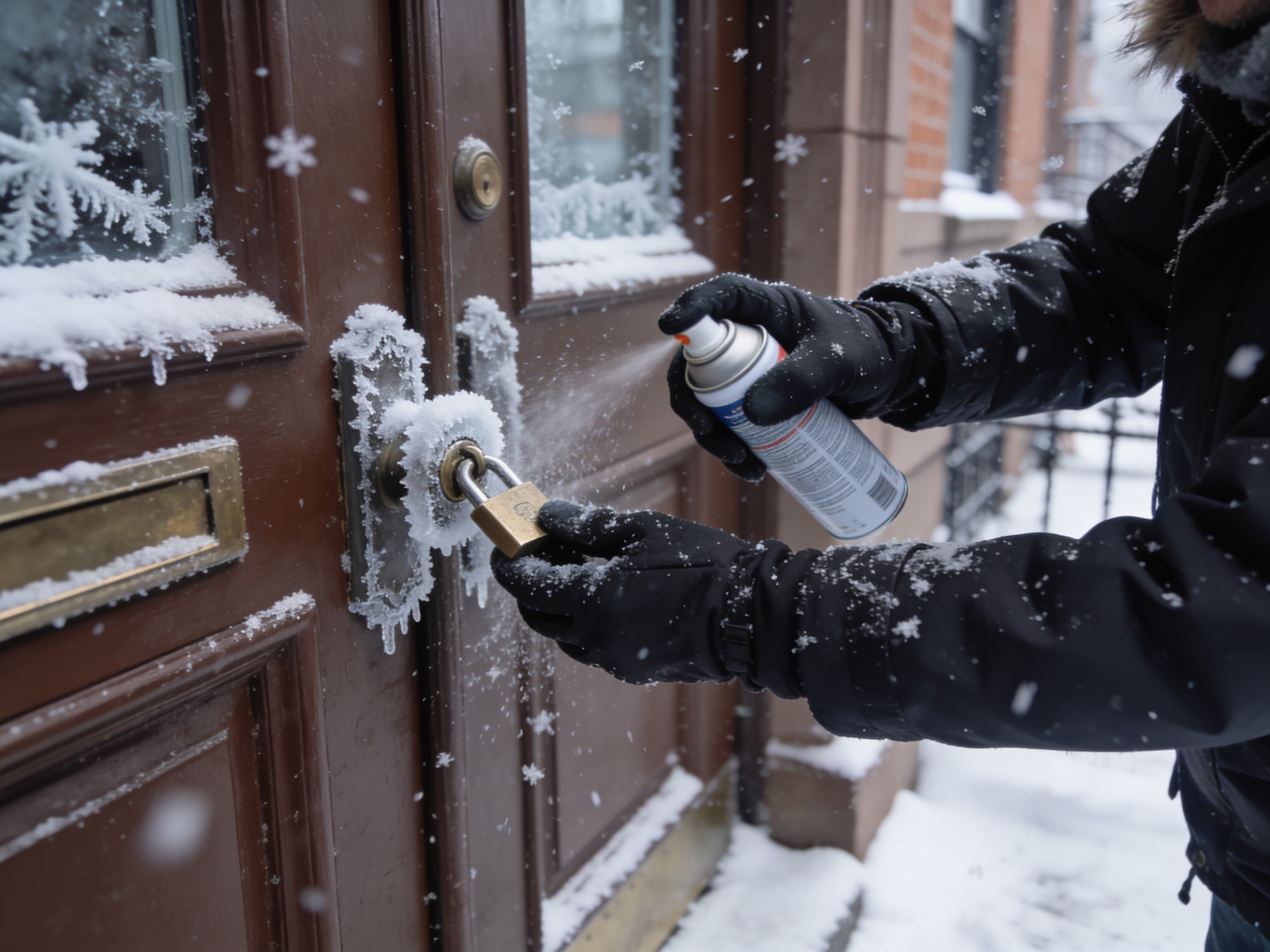
When locks freeze during a New York winter, the first step is to apply a graphite-based lubricant or commercial de-icer directly into the keyway while gently working the key, then call Your Local Locksmith at 554 W 50th St if the mechanism remains stuck after two attempts. This approach addresses the moisture that condenses inside cylinders during the humid subtropical climate's sudden temperature drops, especially in older Manhattan buildings where single-pane windows and uninsulated entryways allow cold air to reach the hardware.
Why Locks Freeze in New York Winters
New York County experiences repeated freeze-thaw cycles each winter that force water into lock cylinders through daily temperature swings. Pre-war walk-ups on the Upper East Side and similar stock in Brooklyn and the Bronx often have original mortise locks installed decades ago; these cylinders lack modern weather seals and collect condensation from humid summer air that later freezes when temperatures fall below freezing. High-rises near Central Park or the Empire State Building face the same issue when wind-driven moisture reaches upper-floor doors. The result is a seized bolt that resists turning and can snap a key if forced. Residents in these neighborhoods notice the problem most after overnight lows following a rainy day, when the metal contracts and any trapped water expands into ice crystals inside the mechanism.
Immediate Steps to Thaw a Frozen Lock
Start by inserting a key and applying steady pressure without turning hard, which prevents breakage. Warm the key itself with a lighter or pocket hand warmer for thirty seconds, then reinsert and repeat the gentle rocking motion three or four times. If that fails, spray a small amount of de-icer or powdered graphite into the keyhole and wait one minute before trying again. Avoid household products like WD-40 in sub-freezing conditions because they can thicken and worsen the bind. Never pour hot water on the lock, as the sudden temperature change can crack the cylinder housing or damage surrounding paint on wood doors common in New York County buildings. After the lock turns, wipe away excess moisture and re-lubricate to reduce the chance of refreezing that same night.
Preventing Future Freezes
Install a lock cover or weather strip around the door frame to block wind-driven moisture, a common upgrade in Times Square-area commercial spaces and Upper East Side apartments. Schedule annual lock maintenance before the first hard freeze, focusing on older cylinders that have accumulated years of grime. For buildings with multiple entry points, consider rekeying to high-security cylinders that include better internal drainage. Homeowners in the Bronx and Brooklyn often combine this with door sweeps to limit air infiltration. These steps reduce the frequency of ice buildup without requiring full replacement of existing hardware.
When Professional Help Is Required
If the key still will not turn after lubrication and warming attempts, or if the key breaks inside the cylinder, contact a 24 hour locksmith New York immediately rather than risking further damage. Technicians familiar with Manhattan's mix of pre-war and post-war construction can extract broken keys and repair or replace the cylinder on site. For after-hours incidents in Midtown high-rises, see How to Handle a Lockout After Hours in Midtown High-Rises. Properties with original hardware may also benefit from the approach outlined in Rekeying Locks in Pre-War Walk-Ups on the Upper West Side. In persistent cases, a full lock repair service restores function while preserving the door's original appearance. Your Local Locksmith maintains 24/7 availability from its base at 554 W 50th St to handle these calls across New York County and nearby boroughs.