
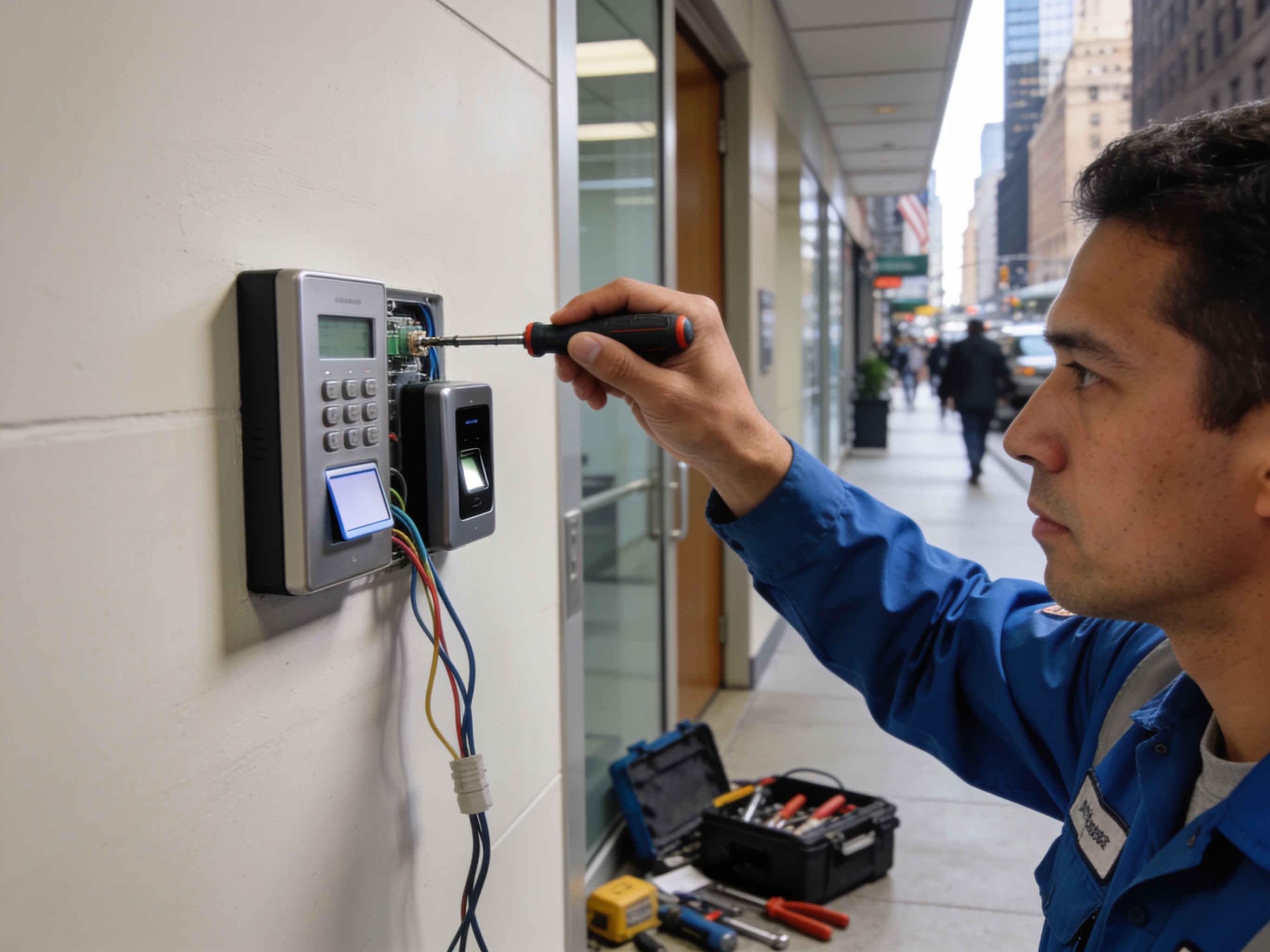
Manhattan buildings in the Upper East Side and around Central Park often feature pre-war construction with thick masonry walls and outdated wiring that complicate access control installs. Systems must integrate with existing intercoms or elevators while meeting New York City building codes for fire egress. Outdoor card readers near Times Square face constant foot traffic and summer humidity that can corrode contacts, requiring sealed units rated for coastal conditions. Technicians based at 554 W 50th St routinely run conduit through narrow shafts and coordinate with building supers to avoid disrupting tenant access during peak hours.
Winter cold snaps in New York County freeze outdoor keypads and drain batteries faster on wireless readers serving Bronx and Brooklyn commuters. Proper grounding prevents interference from the dense network of subway lines and high-rises near the Empire State Building. Edge cases include retrofitting biometric readers into co-op lobbies where board approval is needed before drilling into historic facades. Always verify power availability at each door before specifying PoE versus battery backup to prevent callbacks during humid summer storms.
Commercial installations in Midtown frequently tie into existing alarm panels for multi-tenant floors, while residential jobs in walk-ups require slim readers that fit narrow door frames. Local code requires fail-safe unlocking on fire alarm activation, so systems are programmed with specific relay logic tested on-site. Materials like stainless steel readers hold up better against salt air carried from the rivers than cheaper aluminum units.
Technician insight
In New York County the thing that catches most people out with Access Control System Installation is the mix of 100-year-old knob-and-tube wiring and narrow door frames in Upper East Side walk-ups. Running new low-voltage cable without disturbing plaster or violating fire ratings takes extra time that flat-rate quotes never cover.
Upper East Side Co-op Retrofit
A six-story pre-war building near Central Park needed modern access after repeated lockouts. Existing wiring was brittle and no spare conduit existed. We installed wireless readers on four doors with battery backup rated for winter cold, tied them to the existing intercom, and programmed schedules that release on fire alarm. Tenants gained key fob entry without new wiring runs.
Access Control System Installation Services We Offer
✓Keypad Entry System Installation
Install weather-sealed keypads on lobby and service doors in Upper East Side buildings to replace worn mechanical locks while maintaining 24/7 tenant access.
✓Card Reader Access Setup
Mount proximity or smart card readers on high-traffic entrances near Times Square and Central Park with audit logging for property managers.
✓Biometric Access Control Integration
Add fingerprint or facial recognition readers in commercial spaces in New York County where keycards are frequently lost or shared.
✓Remote Access System Installation
Configure smartphone-controlled locks and cloud management for apartment buildings serving residents who commute between Manhattan and Brooklyn.
✓Intercom-Integrated Access Control
Link video intercoms with electric strikes in pre-war co-ops around the Empire State Building for visitor screening without extra hardware.
Access Control System Installation Cost in New York
| Service | Typical Range | What Affects It |
|---|---|---|
| Single-door keypad system | $650–$1,200 | Higher when masonry drilling or conduit runs are required in pre-war buildings. |
| Multi-door card reader install | $2,800–$5,500 | Price rises with software licensing and integration to existing intercoms. |
| Biometric reader addition | $900–$1,800 per door | Depends on network drops and enrollment station setup. |
| Remote access smartphone upgrade | $450–$950 | Lower for wireless retrofits; higher when PoE cabling is added. |
Ranges are typical for New York and confirmed with an exact written quote before any work starts.
How it works
- 1
Site Survey
Inspect doors, existing wiring, and power sources in the specific Manhattan building to identify integration points and code constraints.
- 2
System Design
Select readers, controllers, and software that match the building's age, traffic patterns, and weather exposure near Central Park.
- 3
Hardware Mounting
Install readers, strikes, and cabling while coordinating with supers to minimize disruption during business hours.
- 4
Programming and Testing
Load user credentials, set schedules, and verify fire-alarm release and battery backup function before final walkthrough.
Pricing
Pricing varies by number of doors, reader type, and integration complexity in older Manhattan stock.