
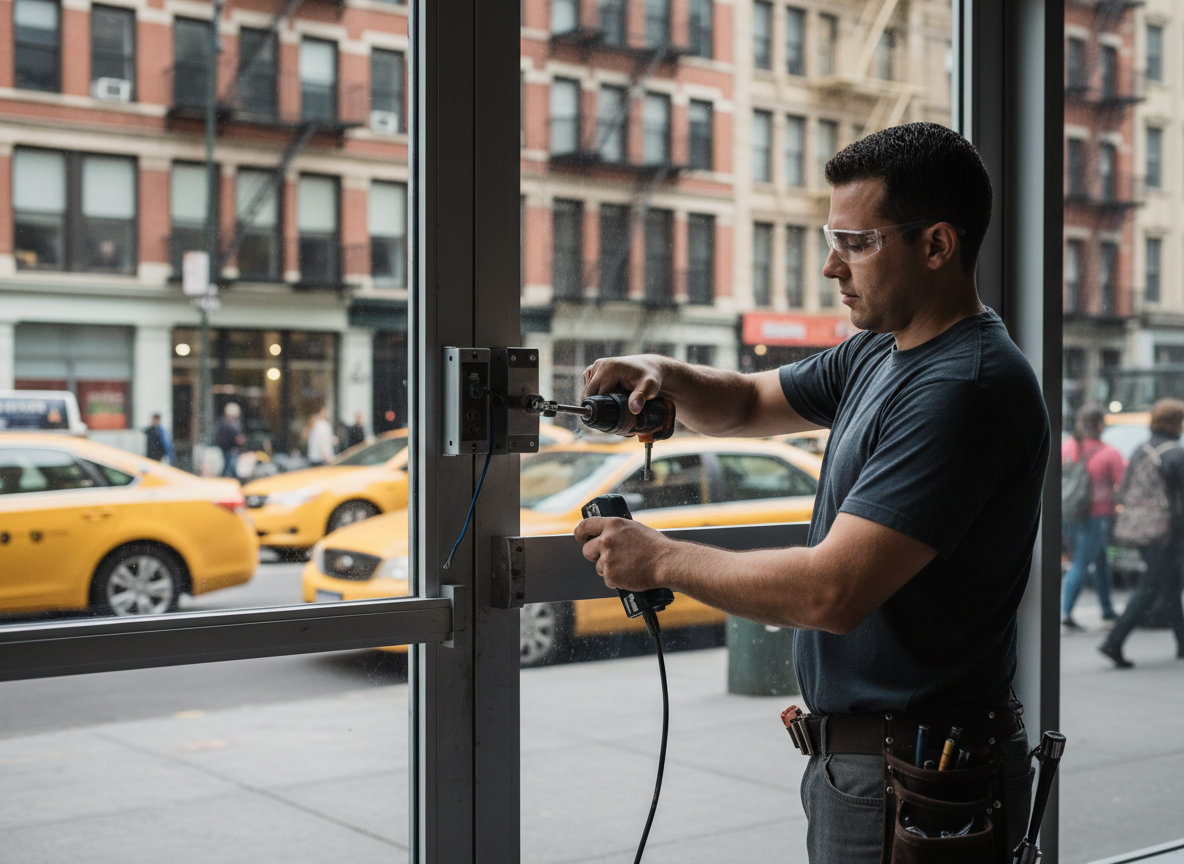
Panic bars must meet strict New York City egress codes on doors in pre-war buildings common throughout Manhattan and the Upper East Side. Older wood and steel frames around Central Park often require custom strike plates and shimming to prevent binding during humid summer months or when winter temperatures drop sharply. We stock heavy-duty Von Duprin and Sargent models that handle the constant foot traffic near Times Square and the Empire State Building without premature wear on the latch mechanism.
Installation in Brooklyn and Bronx row houses frequently involves retrofitting narrow vestibule doors where existing closers fight the panic bar spring. Technicians check for proper 1/8-inch gap clearance at the top and sides to avoid weather-stripping interference during New York County’s humid subtropical swings. We also verify the bar releases under 15 pounds of force as required for public assembly spaces.
High-rise commercial properties near 554 W 50th St often need electrified panic bars tied into existing access control systems. Our crews test the full cycle after installation to confirm the door stays latched against wind loads off the Hudson while still allowing instant exit. Skipping this step is the most common cause of callback jobs in the area.
Technician insight
In New York, the thing that catches most people out with panic bar installation is the condition of 80- to 100-year-old wood frames in Manhattan buildings. The wood compresses around the strike plate over decades, so you have to add solid blocking behind the jamb or the bar will loosen again within a year when winter cold makes the door swell.
Upper East Side commercial exit
A ground-floor retail space near Central Park reported the existing panic bar sticking during cold snaps. We found the strike had shifted because the original 1920s frame had settled. We installed a new Sargent 8800 series bar with added shims and blocking, then tested the release force. The door now opens cleanly every time regardless of temperature.
Panic Bar Installation Services We Offer
✓Commercial Panic Bar Installation
Full installation of code-compliant panic hardware on storefront and office doors serving high-traffic Manhattan locations.
✓Emergency Exit Device Retrofit
Replace outdated or failed exit devices in Upper East Side apartment buildings while keeping the door in service during the swap.
✓Electrified Panic Bar Installation
Integrate panic bars with card readers and alarms for commercial properties near Times Square and the Empire State Building.
✓Panic Bar Repair and Adjustment
Diagnose and correct sticking, misalignment, or weak spring tension on existing bars in New York County buildings.
✓Multi-Door Panic Bar Projects
Coordinate installation across several exits in Brooklyn and Bronx commercial spaces to maintain uniform hardware and keying.
Panic Bar Installation Cost in New York
| Service | Typical Range | What Affects It |
|---|---|---|
| Standard commercial panic bar install | $450–$850 | Single door, no electrification, typical pre-war frame |
| Electrified panic bar install | $950–$1,800 | Includes wiring tie-in and access control integration |
| Panic bar repair or adjustment | $175–$375 | Labor only on existing hardware |
| Multi-door commercial project | $2,200–$4,500 | Three or more exits, volume pricing applies |
Ranges are typical for New York and confirmed with an exact written quote before any work starts.
How it works
- 1
Site Assessment
Measure door thickness, frame condition, and existing hardware at the Manhattan location to select the correct bar model.
- 2
Hardware Selection
Match the panic bar to building code requirements and traffic patterns for the specific neighborhood.
- 3
Installation And Alignment
Mount the bar, adjust the strike, and set spring tension so the door releases cleanly under load.
- 4
Final Testing
Cycle the door repeatedly and confirm it meets New York City egress force standards before leaving the site.
Pricing
Most Manhattan commercial jobs fall between a few hundred and low four figures depending on door condition and whether electrification is added.